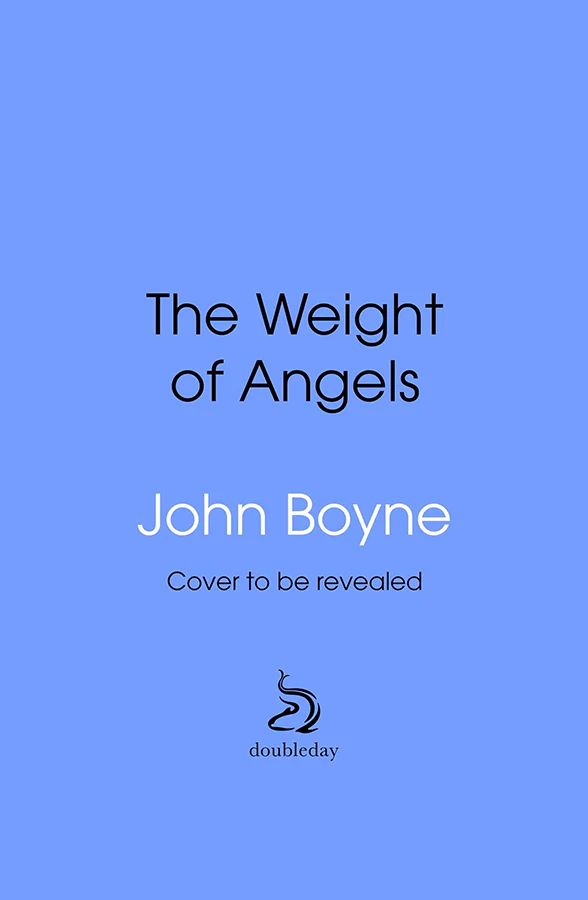
The Weight of Angels
The life Oscar Wilde never had — reimagined by John Boyne in his most ambitious and emotionally powerful novel yet.
'Wise, imaginative, funny, and extremely moving' Tan Twan Eng, Booker longlisted author of The House of Doors
'A richly inventive multi-media novel of literary might-have-beens' John Banville, Booker prize winner of The Sea
__________
Can one rash decision prove the difference between a life well lived and a life destroyed?
When the Marquis of Queensbury left his calling card at the Albemarle Club in February 1895, it bore only his name and five words: ‘For Oscar Wilde, posing Somdomite’. The famous playwright sued for libel, which led to his arrest, criminal prosecution and imprisonment. From then on, his gilded existence spiralled into public disgrace and an early death.
But what if he had simply ignored the insult?
Rather than dying impoverished in Paris at forty-six, what if he had lived to bear witness to the momentous events and cataclysmic changes at the start of the twentieth century, and even influence some of them? What if the second half of his life were as celebrated, dramatic and tumultuous as the first?
Like Maggie O'Farrell's Hamnet and Percival Everett's James, John Boyne explores one of the great what-if stories of modern literature, giving the great Anglo-Irish playwright an opportunity to take an entirely different path.
?***** 'Remarkable, funny and very touching’ READER REVIEW
?***** 'Enjoyed this book so much I bought The Picture of Dorian Grey’ READER REVIEW
?***** 'I devoured it in just a few days. Completely transported!’ READER REVIEW
Original: $19.40
-65%$19.40
$6.79More Images
The Weight of Angels
The life Oscar Wilde never had — reimagined by John Boyne in his most ambitious and emotionally powerful novel yet.
'Wise, imaginative, funny, and extremely moving' Tan Twan Eng, Booker longlisted author of The House of Doors
'A richly inventive multi-media novel of literary might-have-beens' John Banville, Booker prize winner of The Sea
__________
Can one rash decision prove the difference between a life well lived and a life destroyed?
When the Marquis of Queensbury left his calling card at the Albemarle Club in February 1895, it bore only his name and five words: ‘For Oscar Wilde, posing Somdomite’. The famous playwright sued for libel, which led to his arrest, criminal prosecution and imprisonment. From then on, his gilded existence spiralled into public disgrace and an early death.
But what if he had simply ignored the insult?
Rather than dying impoverished in Paris at forty-six, what if he had lived to bear witness to the momentous events and cataclysmic changes at the start of the twentieth century, and even influence some of them? What if the second half of his life were as celebrated, dramatic and tumultuous as the first?
Like Maggie O'Farrell's Hamnet and Percival Everett's James, John Boyne explores one of the great what-if stories of modern literature, giving the great Anglo-Irish playwright an opportunity to take an entirely different path.
?***** 'Remarkable, funny and very touching’ READER REVIEW
?***** 'Enjoyed this book so much I bought The Picture of Dorian Grey’ READER REVIEW
?***** 'I devoured it in just a few days. Completely transported!’ READER REVIEW
Product Information
Product Information
Shipping & Returns
Shipping & Returns
Description
The life Oscar Wilde never had — reimagined by John Boyne in his most ambitious and emotionally powerful novel yet.
'Wise, imaginative, funny, and extremely moving' Tan Twan Eng, Booker longlisted author of The House of Doors
'A richly inventive multi-media novel of literary might-have-beens' John Banville, Booker prize winner of The Sea
__________
Can one rash decision prove the difference between a life well lived and a life destroyed?
When the Marquis of Queensbury left his calling card at the Albemarle Club in February 1895, it bore only his name and five words: ‘For Oscar Wilde, posing Somdomite’. The famous playwright sued for libel, which led to his arrest, criminal prosecution and imprisonment. From then on, his gilded existence spiralled into public disgrace and an early death.
But what if he had simply ignored the insult?
Rather than dying impoverished in Paris at forty-six, what if he had lived to bear witness to the momentous events and cataclysmic changes at the start of the twentieth century, and even influence some of them? What if the second half of his life were as celebrated, dramatic and tumultuous as the first?
Like Maggie O'Farrell's Hamnet and Percival Everett's James, John Boyne explores one of the great what-if stories of modern literature, giving the great Anglo-Irish playwright an opportunity to take an entirely different path.
?***** 'Remarkable, funny and very touching’ READER REVIEW
?***** 'Enjoyed this book so much I bought The Picture of Dorian Grey’ READER REVIEW
?***** 'I devoured it in just a few days. Completely transported!’ READER REVIEW